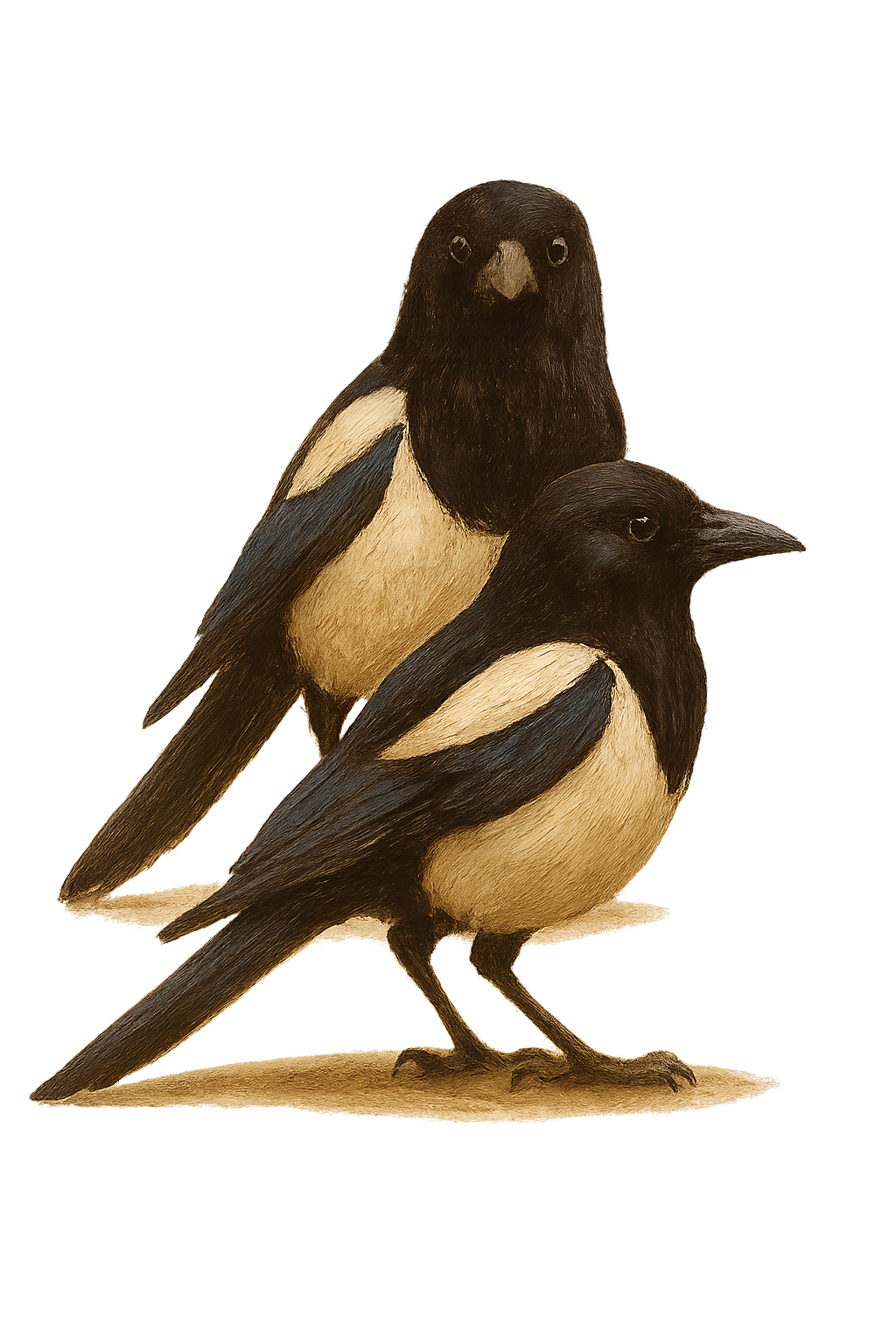
Notes from Birds
an unpublished novel
It’s a grim sky, the clouds dull and monotonous as they’ve been all day and a light drizzle starting for the umpteenth time, so I scrape a skin of water from the arms of my tuxedo.
The river’s still climbing. I look beneath the bridge. Small branches and debris are piled in nests around the pylons. The branches beat against the current. The current beats the branches back against the pylons and the branches beat against the current from the strength of the pylons. Now and again a branch cracks, sending crazy riffs of wood off into the flood.
I feel this through my feet.
There are a couple of kids here. Two boys and a girl. One boy throws a stick off the bridge, the girl watching. The other leans against the railing on a bike and wheels away in a lazy arc before returning. The others hardly noticing.
Like the first flood I had ever seen, in my early years of high school. I wasn’t much older than you. We rode our bikes down to the caravan park, to the place where the road dropped into water. We picked up stones and bounced them off the roof of the bobbing vans. They made hollow sounds when they hit.
But that was a blue-skied, spring flood. This is all brown water and low, grey clouds. Hardly wedding-day weather. Hardly a summers’ celebration. Who ever knew of a summer flood, or January rains? So if the vans are under water again, no-one’s ringing their rooftops.
Kat’s back at the Hotel all tizzied up. Family in attendance and the band playing. I hear the thud of the bass from the bridge, and I know you’re sitting on a stool in the corner next to your mum. The Day Leave has come through in the nick of time, thank God. I’d hate for you to have missed this, missed you sitting next to your mum on the corner stool. Maybe she makes you dance.
The battered yellow Ford pulls up next to Knight’s Meats. He isn’t dressed for a wedding. He has on blue jeans and that versatile jacket. The boy wheels away from the edge again in a dizzy little spiral and returns.
He jumps out of the car, like a younger man might, and comes towards the walkway of the bridge. But as he steps to the raised path, he stumbles a little. Recovers, and keeps coming like a younger man.
I say to him, “You didn’t RSVP. Did you lose your invitation?”
He says he isn’t coming at all. He isn’t just late, he was never coming. And it’s just as well. It would have been complicated.
He apologizes. Half-apologizes. He produces a present. He produces a small, round package from the pocket of his jacket.
And then the tree comes down-river. A huge remnant gum from some upstream bank. It comes down-river and wheels upright in the water, so that the base of the tree grips in the current and is driven forward, while a thousand leaves fling upward above. Then it lays flat in the water and sloughs to the left and comes towards the bridge.
It comes and it keeps coming and when it comes it hits the pylon right beneath our feet and the whole bridge gives a sound like a cricket stroke and the bridge jumps. Everything shakes below our feet, then drags and holds and the girl is gone, running off in the direction of North Wagga and the boy with her. The boy on the bike remains, he looks uncertain how to move.
Someone swears.
We rush to the railing just in time to see the tree tear in two. It sits against the pylon like a cracked shotgun, then gives way. Then we run across to the downstream railing, just in time to see half the tree wheel away in the water, all torn, and its flesh yellow, wet and bright.
Hardly wedding day weather at all.
1.
Kat’s just gone down to the beach. She walks down in the morning and sits in the little river where the lake empties out into the sea. It swells on the night tide and empties out again each morning so that you see more and more rocks as the hours pass – and if you look closely, fish slipping around the rocks for bigger water.
Kat sits in the river and watches everything. The water, the fish, other people. She watches families trailing kids. Boogie boards and beach tents flying.
The wind gets up across this large swathe of sand and accounts for all the crusty drifts out near the river mouth. So Kat sits further back, in the crook of the river, in the shelter of the great green dune. She feels hot all the time now, but the water here is just right. Soon I’ll go down and sit in the cool with her.
I can see her from where I sit writing to you. The place we’re renting has these huge front windows, a full ocean view. Near the window, a desk. I sit at the desk with an oak top, a locked drawer for private papers, and a chair covered in a shaggy woollen rug. With my scruffy head, Grandpa would say, ‘You look like a shag on a rock’. I suspect I look more like a sheep sitting on a sheep.
Outside the window, Kat sits in the little river with her big belly half-in, half-out and a huge yellow sun-hat on her head. She wears a hat so big it’s ridiculous. She’s a pregnant Audrey Hepburn. Like an old movie star, from long before you’d know.
And this is how we plan the days go – she goes to the river first thing, while I write for a while, and then we have an early lunch at the little blue café up the street. The rest of the day fills in just fine. We do puzzles. We read a pile of books on childbirth and parenting. Not your typical honeymoon, I guess.
You and your mum made a great couple at the wedding. So much has happened, and to see you guys setting the floor alight was amazing. No pun intended! Can’t believe you can dance. Your mum moves like she grew up in a swamp and you have this way of hopping around on your toes like you are a coiled spring about to go off.
You are all of that. You are about to go off. When you get out of JJC you are going to spring to life just like that. You are going to have so much energy, just ready to burst, like a bird from a cage. That’s how you danced.
They used to say tough guys don’t dance. That’s obvious bullshit. One more shallow, underdone story to mess up kids. We mess them up good and early around here and we do it thoroughly.
I was told that too, and I remember holding up a wall at a Year 10 formal while girls came and went asking for a dance and ended up dancing with each other. All these guys stuck to the wall, terrified by toughness.
You’ve already proved it wrong, tough guy. You danced like an explosion going off.
I’m planning to fill in the gaps on what happened for you. What happened to you. Silence and anger set you on fire, so let all silence end. Not sure I can do much about the anger, or even that anyone should (maybe this much was always right) - but I can fill some of the silence. Your mum is too bound by codes to fill you in completely, and you know your Dad won’t now. So if anything good has come out of me getting to know you, it’s this: I know you, Tick. I know you. And I know your people. And I know what went on around you among them when you were down by the river smoking fags, starting fires and taming half-wild creatures.
It might seem as though things aren’t turning out so well for you, but look further ahead, Tick. You’re not the sum of everything that’s happened. You’re not even the sum of everything you’ve done. There’s so much more in you. So much spare room.
Look ahead.
You should be seeing uni. You shouldn’t ever think it isn’t for you. You know you’re smart, and you’re smarter than you know. You’ve nailed smart-arse so well for a reason. Smart-arses run the world. You can get a degree in that stuff, if you know how to work it.
That’s where Kat and I got together. I can tell you how Kat ended up sitting in that little river by following the current all the way back upstream, back a couple of years now, to University.
Think winter cold. I remember that the beer in my hand was like an arctic extension of me. I bought it at the Black Swan on the way out to the Union. It’s cheaper at the Union, but there’s always people at the Duck to say hello too.
I opened the beer as I walked from the car park and drank from it wincingly. The Union windows were fogged and inside the air was thick with sweat and smoke. A band from the city pounding its way through a set. People further from the doors are down to T-shirts, and jumpers and coats are thrown on the lounges near the bar. I nod to Fish, behind the bar, and hold my beer up in hello.
“Where you been?” Fish shouts.
“Been working. Had to come out late,” I say. “How’s the band?”
Trav hits me from behind.
I push him back and Tash, his girlfriend, bounces backwards and away from him. She pushes back at Trav, who takes it on the shoulder and spills some beer.
“Bass player’s good.”
“Faint praise.”
“The singer thinks he’s in Simple Minds.”
On cue, the singer bent his body forty-five degrees and dropped his hair artfully over the microphone.
“Where’s Kat?” I asked.
“Getting slaughtered”, he said.
Trav nodded at the dance floor.
I could see Kat now she was pointed out. A strangely Victorian dress, and her hair, normally raked into a practical ponytail, loose around her serious face. She was slow-dancing with a girlfriend from class, even though the music was a hundred miles an hour, and a group of aggies were pogo-ing around them with some menace. She was oblivious. She danced like it was a 1930’s swing club. Girl got style.
“I’ve got a half a slab out back!” Fish called from the bar.
Fish served bar both ways. He kept the front of house bar and a certain amount of booze flowing out the back door too. Just between friends. The Union would check stocks, but assumed a student-sized margin of error. I leant across the bar.
“Give me ten minutes!” he shouted into my ear. “I’ll meet you at your car! Don’t forget to get the slab!”
“Thought we were staying a while!”
“The band’s shit!”
“Beggars can’t be choosers!”
“What are you talking about, Pete? Beggars are fucking experts. Think of all the things they’ve already given up! Let’s go to the Duck. Let’s get pool-side!”
“Deal. I’ll get Kat.”
“OK. Avoid Other Pete. He’s shit-faced and looking for a ride.”
I went to rescue Kat from the farm boys.
“Do you wanna go?” I said. Her friend from class said hi and went to the bar.
She sucked me into a crazy slow-dance.
Dance is an idea best nailed to a wall, I’ve always believed. But I loved to watch her dance and wished I could lock in with her and move with her the way she moved. You’ll get this one day, I said to myself, and I’m still waiting for that day.
“Do you want to dance?” she said.
“Yes”, I lied. “But we’re going to the Duke with Fish.”
“When I finish my dance”, she said.
“Or when those aggies finish you”, I shouted. “Whichever happens first.” One of them bounced off her back, which broke her rhythm, somewhat.
I stepped back for a moment, then with a “Sorry, Kit-Kat”, picked her up and carried her over my shoulder back to the bar.
“See you in five!”, Fish shouted. “The slab!!!”
We sat on the hood of the car and watched the town lights, our arses clenched against the cold. Kat turned away from the lights and looked back at the Union and the people filtering from the building into cars.
“Where’s Fish?” she asked.
“Five minutes, hey?”
Engines of other cars revved and car-lights reflected off each other. Among all the reflected light people moved in shadowy forms.
“Where the hell is Fish?”
I watched as one lone person came out of the Union and down the path. It looked like Fish, but with the light of the Union behind all I could see was a silhouette. I could see the person’s jacket bulging with beer-shaped bulges.
At last.
The person tripped a little off the gutter into the car park and a can fell out from underneath the jacket and hissed away on the ground at their feet. They looked down at the beer spraying their shoes and didn’t move.
Finally, it stopped foaming and they kicked it away across the car-park. They looked about themselves and made a mazy line for where we sat. They passed under a light and I could see that it wasn’t Fish at all.
It was Pete.
Pete Fitzpatrick was in my American Literatures class. Fish and I took that class together, and in the first tutorial, the tutor had called the roll. Me first, a little later Fish (by his real name, obviously), and then called my name again. When I said, ‘I’m still here’, he replied ‘The other Peter’. So now you see.
“Gotta get to the Red Door. Are you going?” Other Pete said.
“We’re going to the Duke.”
“Duke or Duck?” he said.
“Duke”, I said.
“Same thing. You’ll still pass the Red Door.”
He handed me a beer from his jacket for fare. I put it by me on the hood of the car.
“How are you going to get to the Red Door, Pete?”, Kat said.
Have you heard of passive-aggressive?
“You’re gonna take me, aren’t ya?” He slumped against the car and vomited by the right tyre.
“That’s the way to convince us”, I said.
“Charming”, Kat said.
“Thanks Pete. You’re a mate.”
He grinned a filthy grin and got into the back seat of the car. Kat watched the town lights in silence.
“Did you see Fish up there?”, I shouted back into the car.
No response.
Kat said, “Stuff Fish. He can find his own way there. We’re full up on freeloaders now.”
We got into the car and I reached over the back to prop him up against the window. He had collapsed over onto the seat with his torso tilted at an awkward angle. He looked like a cracked gun.
“You should leave him”, Kat said. “It’ll constrict the blood flow better.” She was studying nursing. She knew how to hurt or heal. Knew how to dole things out.
At the round-about she leant back and righted Other Pete again, for he’d slumped back into the seat, and she used the roundabout for skillful momentum. We drove through the gates toward North Wagga. The road ran straight and dark and the white line zipped broken down the middle of it. The beer fell off the hood just as we passed through the gates.
In a flash, the car filled with light.
I turned and saw the look on Kat’s face and the way her eyes opened in surprise. I glanced back at Mark but couldn’t see anything. Now I was travelling blind and backwards. My eyes were shot. As I turned back to the front I couldn’t see the road or the white line. I simply kept the wheel straight.
The light tailed us. It tailed us as our eyes adjusted and the road came up ahead of me again. I had drifted to the right. I straightened up.
Soon the light came alongside us and shot ahead of us, for a long way on the wrong side of the road. Or the right side. It was all confused.
I could see silhouetted passengers in the back of a ute, three or four of them crammed into the cab, and one in the back hanging onto a spotlight and training it on things as they flew by.
“Aliens,” said Kat. “We can only hope they destroy themselves and take more of their kind with them.”
The ute swung around a corner now and disappeared behind the levee. All I could see was the spotlight making a bright wedge into the sky.
Other Pete spoke up from the back seat.
“Thought it was morning. Geez. Bright.”
He slumped back into silence and lay again at an awkward angle.
Just out from North Wagga, we could see the house on the left. When we reached them I pulled onto the side of the road.
The Red Door was all lit up and people were all over the place, inside and out. Those standing outside were like cows in the cold with their breath before them. The Red Door was a tiny brick house built right on the road. A couple of people lived there, but mostly it was for parties and the film students used it for shooting short films. It was a real scene.
Other Pete stumbled out of the car. “Pete, you coming in for a while?”
“No time, Pete, no time. We’re on a mission.” Kat said.
“You coming in?”, again.
“Sorry, mate. We’re going to find Fish. We’re Fishing.”
“OK Pete. See you Kat.”
We pulled away.
“Aren’t we the friendly society tonight?” said Kat. It didn’t sound much like a question.
The levee ran along the side of the street. Tall poplars shot up from the crest of it and we lit up the base of them on the curves.
“Are we stopping at the Duck?”, Kat asked.
“Don’t you want to go to the Duke?”
“No. Let’s stop for a little while. It might be fun.”
It was on the next curve. The Black Swan Hotel. I turned off the engine and rolled into the car-park behind the ute. The spotlight had been left on and it bathed the front of the house next door in a celestial light. Moths criss-crossed in the beam. As we got out of the car, an old man opened his front door and came and stood at the gate of the house in a blue-ragged dressing-gown. He watched us get out.
“Turn off the light, you mongrels.”
Noise from inside the pub.
“I don’t know whose it is,” I shouted back.
“I’ll shoot it out if it’s not out in a minute,” the old man crowed.
“Sorry”, said Kat. “We’ll find them for you.”
Pushing through the doors, the heat from the fires hit us. Fish called from the card machines, “You bastards. You left without me.”
“Christmas was coming.”
“Doesn’t matter. I got a ride down here. I thought I was going to die though. Crammed into the cab like a five year old. Passed you on the way.”
“We noticed,” Jo said. It all made sense.
“I had to give them half the slab to even get here. So you can buy me a drink now. Penance.”
Fish was Catholic. We all were. Sort of.
Fish had a schooner on top of the cardie and a couple of cans parked at his feet. He grinned as he hit the glowing buttons. Cards floated up on the screen and then disappeared again.
“You hanging around? I’m not going to the Duke. This machine’s going to pay out. I know it”, Fish said.
“We’re on a mission. We’re going to the Duke.”
We stayed and played a game of pool anyway. I had a beer and Kat had a cider and then we bought two long-necks of Melbourne at the bar.
Fish waved goodbye as we left.
And I drove out along Oura Road, under the viaduct, and in the rear-vision mirror was North Wagga, and behind it the university and the library lit up like an incandescent beehive.
We passed less and less houses, and soon the houses ended and we passed farms which were quite dark but for distant lights from verandahs or a lounge-room curtain-crack. Kat switched the car light on and the road went dark while she searched in the glove-box.
I drove half by squint and fully by memory.
“Found it,” she said, taking the tape from its cover and put it in the stereo. She flicked off the car-light and the road came up again.
The music came up out of the speakers, small at first, lost in the sound of the engine and the wind. She wound up the window and the music came up louder now, but still tinny against the engine.
Why do the heaters rage behind the firehouse?
Kat picked up one of the Melbourne’s from the floor at her feet and opened it, singing.
This boy and girl they gather pearls of wisdom,
falling from his mouth
I turn off the main road onto the dirt, the fields at the side of the road brittle with stubble and snap-ready.
We enter the reserve and head towards the river, and the car bounces over the ground and we park under a gum on a high bank above the river. The Murrumbidgee runs below, silver-black under the headlights, which before I switch them off light up an island in the middle of the river. And I remember a line that comes to me from somewhere: everything that is lit becomes a light.
Then I switch off the engine and the lights, and the island disappears and everything is silent. The river of course, but besides that, nothing.
In the dark way off to the right, a fire burning and a couple of cars parked near it. People moving about in infernal silhouette. Too far to hear any news of them.
So I turn the ignition back on and the music rises again.
The blood, it won’t wash off, the rum
“What do you want to do now?” Kat asks.
“Drink these beers?”
“I know it’s hard to think beyond that, but.”
I reach under her jumper and she squirms against my hand.
“Sooo cold,” she squirms.
“Why the hell do we drink beer when it’s freezing? We should be drinking brandy or something.”
“Schnapps”, she said. “Après that, a sauna.”
I turn up the stereo and the guitars really grate out of the speakers now. My fingers amputated by cold.
Firehouse!
Firehouse!
Our hands and lips numb from cold glass.
That’s where it all started, Tick. And if you follow that silver-black stream to its foothold in the mountains, and pick a smaller stream running east, you could follow it to where the water runs into the ocean. There you’ll find Kat. Sitting right there. Sitting in the crook of the river, with her big yellow hat above her sizeable belly. And our little baby growing within.
Who’s going to look after that little kid?
That’s me, of course. That’s me. But I can use your help.
And who’s going to look after you?
That’s you, Tick, that’s you. You’re a little man ready to go, and when you get out you start on that straight-away. That’s you, Tick. Telling your own story from here on out and knowing every part of it.
I’m just writing down a few words so you can see this beautiful woman sitting by a river in her big yellow sunhat.
One day you are going to want to see all this for yourself.
(Prologue and Chapter 1 from Notes from Birds)
The Licorice Farm
novel in progress
Finn Finley spent nearly the whole of his fifteenth summer at The Licorice Farm.
A certain kind of reader will suppose this opening sentence suggests Finn Finley to be a sweet confection of character - bound for a summer in some fantastic landscape of candy canes, barley trains and blue trees dropping dew into deep pools of shade on munchable grass below. Another kind of reader will assume The Licorice Farm to be a placeholding name for some kind of regional youth mental institution, or juvenile care home.
Of these two false assumptions, the second is more accurate, though not accurate in any way that might imply Finn Finley was in any kind of real trouble or presenting any developing delinquency or juvenile pathology. Finn Finley was simply a juvenile who, in his fifteenth summer, was beginning to really care. In fact, this summer would see him begin to care in a way that made him feel that he had not ever truly cared for anything before.
(opening lines)